
Image Search Techniques: Complete Guide to Boost SEO and Visibility
Images influence how users interact with websites and search engines. Many users rely on visual results to find products, services, and information faster. Businesses that implement proper image search techniques improve search rankings, attract qualified traffic, and increase engagement.
Search engines cannot “see” images the way humans do. They analyze technical elements such as filenames, alt text, structured data, surrounding content, and page authority to understand image meaning. When these signals align correctly, search engines index images accurately and display them in relevant results.
Optimized images also improve page speed, user experience, and conversion rates. For example, ecommerce websites often receive significant traffic through Google Images because users search visually before making purchase decisions.
Digital Shelby helps businesses implement proven image optimization strategies that improve visibility and long-term SEO performance.
What Are Image Search Techniques and How They Work
Image search techniques refer to optimization methods that help search engines crawl, understand, and rank images correctly. These methods focus on improving technical and contextual signals to help search engines match images to user queries.
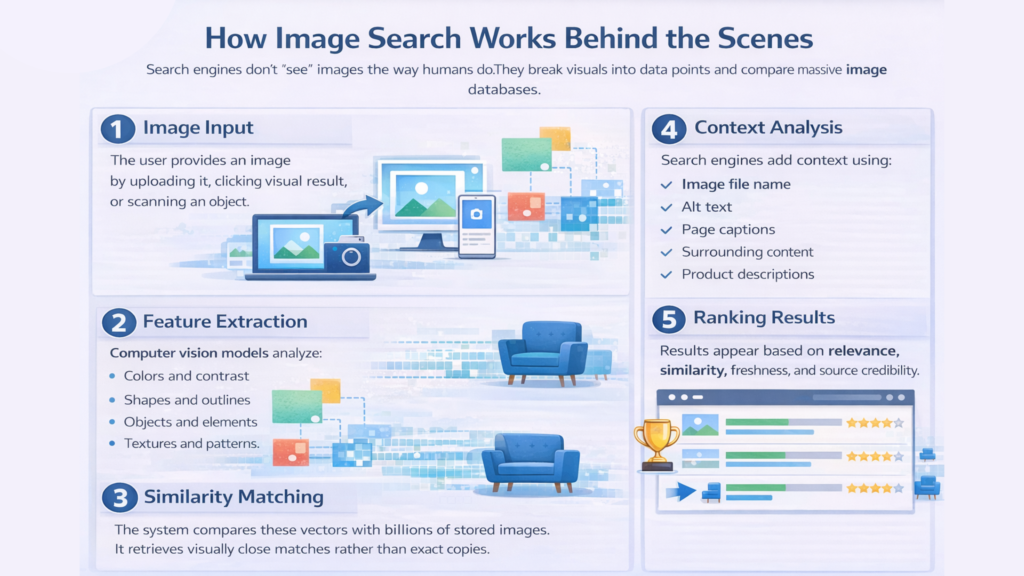
Search engines analyze several key factors:
- Image filename
- Alt text description
- Page content relevance
- Image size and format
- Website authority
- Structured data
When a search engine crawls a page, it reads both text and images. If the image filename and alt text clearly describe the content, search engines can categorize the image correctly.
For example, an image named “seo-dashboard-ranking-report.jpg” provides clear context compared to “IMG_12345.jpg.” The descriptive filename increases indexing accuracy.
Proper image search techniques ensure that images appear in:
- Google Images
- Product search results
- Featured snippets
- Visual search tools
This increases organic traffic without additional advertising costs.
Why Image Search Techniques Are Important for SEO Growth
Image optimization directly improves SEO performance and website visibility. Search engines prioritize websites that provide fast loading speeds, relevant content, and optimized visuals.
One major benefit is increased organic traffic. Many users search visually, especially when looking for products, tutorials, or services. Optimized images appear in search results and attract visitors who might not find the website through text searches.
Another important factor is user experience. Large, unoptimized images slow down page loading speed. Slow websites increase bounce rates and reduce rankings. Optimized images load faster and keep users engaged.
Image optimization also improves accessibility. Alt text helps visually impaired users understand image content using screen readers. Search engines reward websites that provide better accessibility.
Businesses that implement proper image search techniques gain stronger search visibility, improved engagement, and higher conversions.
Core Image Search Techniques to Improve Rankings
Use Descriptive and Keyword-Focused File Names
File names provide important signals to search engines. Generic names like “IMG_5678.jpg” do not provide useful information. Descriptive filenames improve indexing accuracy and search visibility.
For example:
Good filename:
image-search-techniques-seo-guide.jpg
Poor filename:
photo1.jpg
Descriptive filenames help search engines understand the image topic before reading other page content. This improves ranking potential.
Use hyphens to separate words. Avoid using underscores or random numbers. Keep filenames simple and relevant to the page content.
This is one of the simplest but most effective image search techniques businesses often ignore.
Write Clear and Optimized Alt Text
Alt text explains image content to search engines and improves accessibility. Search engines rely on alt text to understand image meaning.
Good alt text example:
alt=”SEO dashboard showing keyword ranking improvements”
Avoid generic descriptions such as “image” or “photo.”
Alt text should:
- Describe the image clearly
- Use keywords naturally
- Stay under 125 characters
- Match page content
Alt text also improves accessibility for users who rely on screen readers.
Optimized alt text increases indexing accuracy and improves image ranking potential.
Optimize Image Size and Improve Page Speed
Large image files slow down websites. Page speed is a ranking factor. Faster websites rank higher and provide better user experience.
To optimize image size:
- Compress images before uploading
- Use WebP format for better performance
- Resize images to required dimensions
- Avoid uploading oversized images
For example, uploading a 4000px wide image when the website displays only 1200px wastes bandwidth and slows loading.
Optimized images improve loading speed and overall SEO performance.
This is a critical part of effective image search techniques.
Advanced Image Search Techniques for Maximum Visibility
Use Structured Data for Better Image Understanding
Structured data provides additional information to search engines. It helps search engines understand image context, product details, and relevance.
For example, ecommerce websites use structured data to display product images in search results.
Benefits include:
- Better indexing
- Rich search results
- Improved visibility
Structured data increases search engine confidence and improves ranking potential.
Place Images Near Relevant Content
Search engines analyze surrounding text to understand image context. Images placed near relevant content perform better.
For example, an image explaining SEO rankings should appear within SEO-related content, not unrelated sections.
Adding captions also improves relevance. Captions help search engines understand image purpose and improve indexing accuracy.
Proper placement improves search visibility and user experience.
This is one of the most important image search techniques for content-based websites.
Use Original and High-Quality Images
Original images perform better than stock images. Search engines prioritize unique and relevant content.
Benefits of original images include:
- Better rankings
- Higher engagement
- Improved credibility
Stock images appear on many websites and provide limited ranking value.
Businesses that use original images gain stronger SEO advantages.
Visual Search Optimization and Its Growing Importance
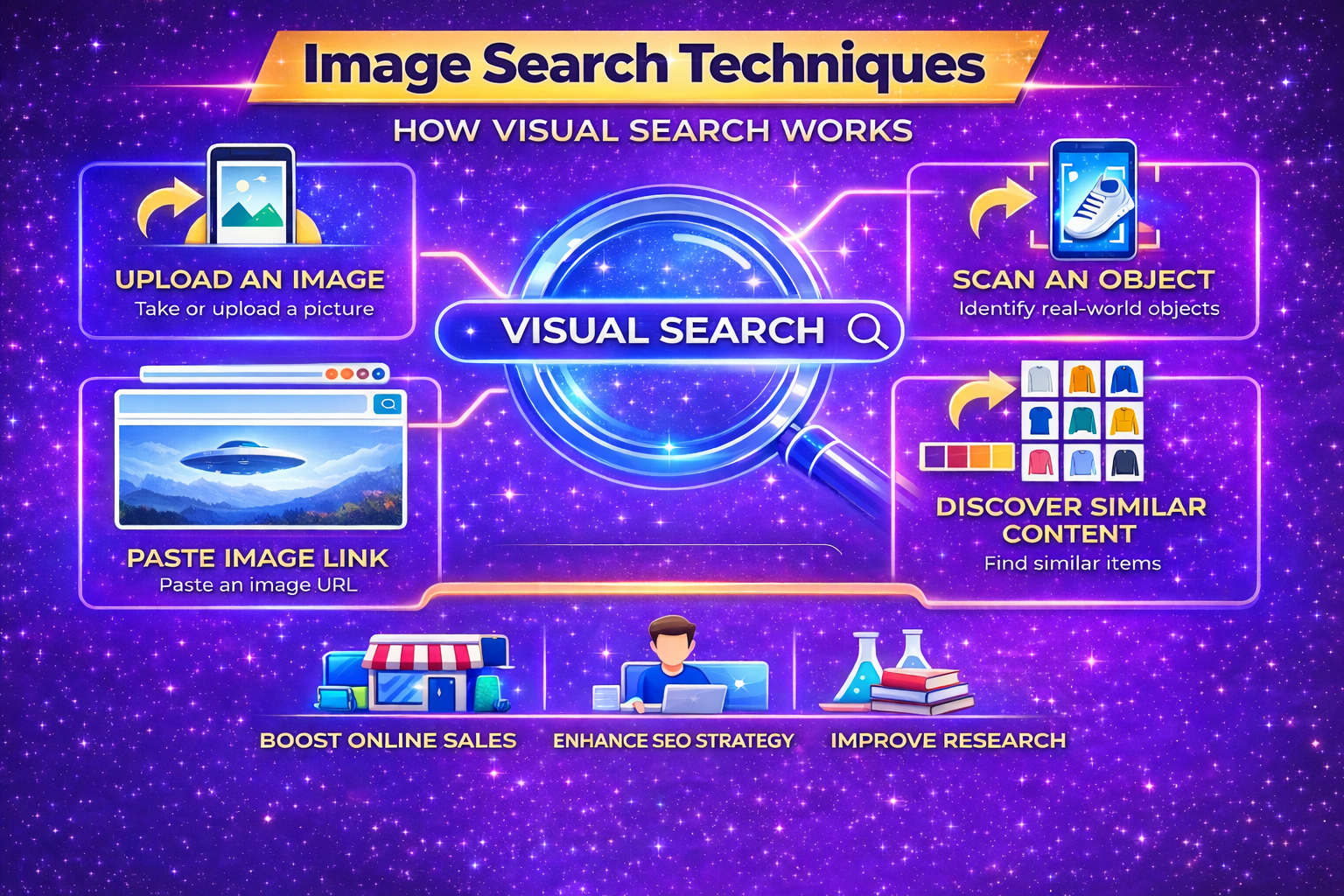
Visual search tools allow users to search using images instead of text. Tools like Google Lens analyze images and provide related results.
To optimize for visual search:
- Use high-quality images
- Avoid blurry visuals
- Focus on clear subjects
- Use descriptive alt text
Visual search continues to grow rapidly. Businesses that optimize images gain early competitive advantage.
Digital Shelby helps businesses implement advanced image search techniques to improve visibility in visual search platforms.
Common Image Optimization Mistakes That Reduce Rankings
Many websites fail to optimize images correctly. Common mistakes include:
- Uploading large image files without compression
- Using generic filenames
- Ignoring alt text
- Using irrelevant images
- Using low-quality visuals
These mistakes reduce indexing accuracy and visibility.
Proper optimization improves performance and rankings.
How Digital Shelby Helps Businesses Improve Image SEO
Digital Shelby provides professional image optimization services that improve search rankings and traffic.
Services include:
- Image SEO audits
- Alt text optimization
- File compression and speed optimization
- Structured data implementation
- Visual search optimization
These strategies help businesses attract more organic traffic and improve search visibility.
Digital Shelby helps clients implement proven image search techniques that deliver measurable SEO growth.
Conclusion
Images play a critical role in modern SEO. Businesses that implement proper Image Search Techniques improve rankings, traffic, and user engagement.
Search engines rely on filenames, alt text, structured data, and page context to understand images. Optimized images load faster, rank higher, and attract qualified traffic.
Digital Shelby helps businesses implement professional image SEO strategies that improve long-term visibility and conversions.
Investing in Image Search Techniques strengthens SEO performance and provides sustainable growth.
FAQs About Image Search Techniques
What are image search techniques?
Image search techniques are optimization methods that help search engines understand and rank images properly. These techniques include optimizing filenames, alt text, image size, and structured data. Proper implementation improves search visibility and increases organic traffic.
How do images improve SEO rankings?
Images improve SEO by increasing engagement, improving page speed, and providing additional ranking opportunities in image search results. Optimized images attract traffic from Google Images and visual search tools.
Does alt text affect SEO performance?
Yes. Alt text helps search engines understand image content and improves indexing accuracy. Proper alt text increases the chances of images appearing in search results.
What image format is best for SEO?
WebP provides the best performance because it offers high quality with smaller file sizes. JPEG works well for photos, and PNG works well for graphics.
Why are image filenames important?
Image filenames provide context to search engines. Descriptive filenames improve indexing accuracy and search visibility.